Reviewing Christmas Happy New Year Clipart for Embroidery
As a designer who has spent countless hours digitizing and stitching out holiday motifs, I approach every new asset with a mix of excitement and skepticism. We all know that what looks crisp on a computer screen does not always translate cleanly to fabric. When I first opened the Christmas Happy New Year Clipart file, my immediate goal was not just to admire the aesthetics, but to evaluate its viability for real-world production. For embroidery designers, small business owners, and Etsy sellers, the difference between a best-selling item and a returned product often lies in these preliminary assessments.
First Impressions and Visual Mood
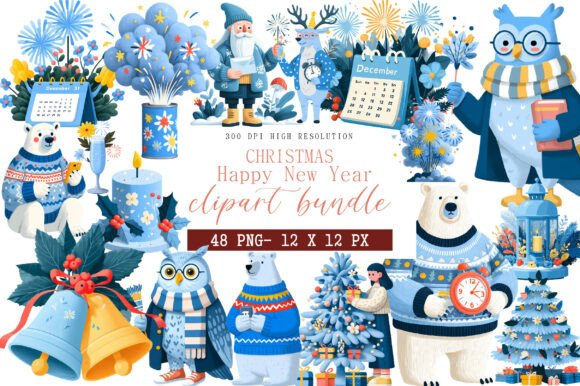
The initial visual impact of this design is warm and celebratory. It captures the dual spirit of the season, bridging the cozy nostalgia of Christmas with the fresh energy of the New Year. From a layout perspective, the composition feels balanced, avoiding the cluttered look that plagues many seasonal graphics. The shapes are distinct, which is crucial when we consider how thread behaves differently than ink.
In the realm of Illustrations, clean lines are king. This clipart offers a visual personality that is friendly yet professional. It does not rely on overly intricate shading that would require impossible stitch counts. Instead, it uses bold forms that suggest clarity. For a craft business owner, this means the design can be scaled down for a baby onesie or enlarged for a tote bag without losing its core identity. The mood it creates is inviting, making it an excellent candidate for personalized gifts and boutique branding where emotional connection drives sales.
Real-World Application: The Custom Sweatshirt Test
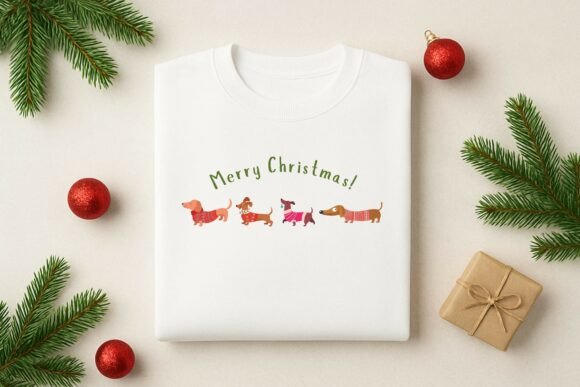
To truly understand how this asset performs, I mentally placed it on a heavy cotton blend sweatshirt, a staple for any winter collection. Imagine a client requesting a custom holiday gift for their team. Using this Christmas Happy New Year Clipart as the central chest piece, the design holds its own against the textured fabric. The key here is how the elements interact with the satin stitch and fill stitch techniques commonly used in machine embroidery.
If the design includes fine details, they must be converted carefully into stitches. In my experience, designs that look good as digital vector art sometimes fail when the needle hits the fabric if the details are too small. This clipart appears to have sufficient spacing between elements, allowing for proper stitch coverage without excessive pulling or puckering. For an embroidered patch or a cap, where space is limited, the compact nature of the layout is a significant advantage. It allows for a high-impact visual without requiring a massive hoop size.
Versatility Across Product Lines
Beyond apparel, this design shows promise for home decor and accessories. Consider a kitchen towel or a tea towel. These items undergo frequent washing, so the stitch density must be managed well. A design that is too dense can make the fabric stiff, while one that is too sparse may not survive the wash cycle. This clipart’s structure suggests it can be adapted with appropriate underlay stitches to ensure durability.
For Etsy sellers looking to expand their digital product offerings, this asset serves as a strong base for printable mockups. You can showcase how the final embroidered product will look on a pillow cover or a nursery decor item. The versatility extends to baby embroidery as well, provided the scale is adjusted to suit smaller garments. The playful yet clean aesthetic fits well with the soft, gentle vibe required for infant products.
Technical Considerations for Stitching
While the visual appeal is strong, practical execution requires attention to detail. When working with this type of machine embroidery design, you must consider the fabric texture. On thin or stretchy fabrics, such as jersey knits used for t-shirts, a proper stabilizer is non-negotiable. Without it, even the best-designed clipart can distort during stitching.
I also recommend testing the design on dark fabric backgrounds. Holiday themes often use bright thread colors like reds, greens, and golds. On dark navy or black garments, ensuring high contrast is vital for readability. If the original clipart relies on subtle color shifts, you may need to simplify the thread palette. Using fewer thread colors can reduce machine stops and production time, which is crucial for commercial embroidery projects where efficiency impacts profit margins.
Another critical factor is the handling of small lettering or intricate corners. If the "Happy New Year" text is part of the clipart, ensure it is large enough to be legible after stitching. Tiny serif fonts often turn into blobs of thread. If necessary, switch to a sans-serif style or increase the size significantly. Always inspect the design in a black and white mockup to check for value contrast and clarity before committing to the hoop.
Enhancing Brand Value and Customer Trust
Using high-quality design assets directly influences perceived value. A clean, well-executed embroidery project signals professionalism. When customers receive a handmade product that looks polished, their trust in your brand increases. This clipart, when stitched correctly, contributes to that perception of quality. It avoids the amateurish look of poorly digitized files, where jumps are visible or edges are ragged.
For small shop products, consistency is key. If you use this design across a range of items—such as aprons, tote bags, and caps—it helps build brand recognition. Buyers begin to associate that specific festive look with your store. This is particularly important during the holiday rush, where shoppers are looking for reliable, giftable items. A cohesive collection featuring this motif can drive higher engagement and sales.
Practical Designer Notes
Before launching this design into your production line, follow these steps:
- Test on Scrap Fabric: Always stitch out a sample on the same material you intend to sell. Check for puckering, thread breaks, and registration issues.
- Check Stitch Density: Ensure the fill areas are not too dense for lightweight fabrics. Adjust density settings in your digitizing software if needed.
- Verify Licensing: Confirm whether the license allows for commercial use. As an Etsy seller or craft business owner, you must ensure you have the right to sell finished items made with this digital embroidery file.
- Evaluate Hoop Size: Make sure the design fits within your standard hoop sizes. If it requires a large hoop, consider if your machine can handle it efficiently.
- Thread Color Contrast: Plan your thread colors in advance. Test combinations on both light and dark fabrics to ensure visibility and aesthetic appeal.
In conclusion, the Christmas Happy New Year Clipart offers a solid foundation for holiday embroidery projects. Its strength lies in its balanced composition and versatile application. However, its success ultimately depends on the skill of the embroiderer and the preparation involved. By treating it as a serious design element rather than just a graphic, you can create finished products that stand out in a crowded market. Whether you are creating a single personalized gift or a full line of small shop merchandise, this design deserves a spot in your seasonal toolkit, provided you respect the technical demands of the medium.